
There are endless combinations of wood species, colors and finishes for your custom furniture. Below you’ll find popular options that are luxurious, sustainable and environmentally friendly. If you don’t see what you want here, contact us for custom options.
Chose From Curated Colors and Finishes
Wood Species
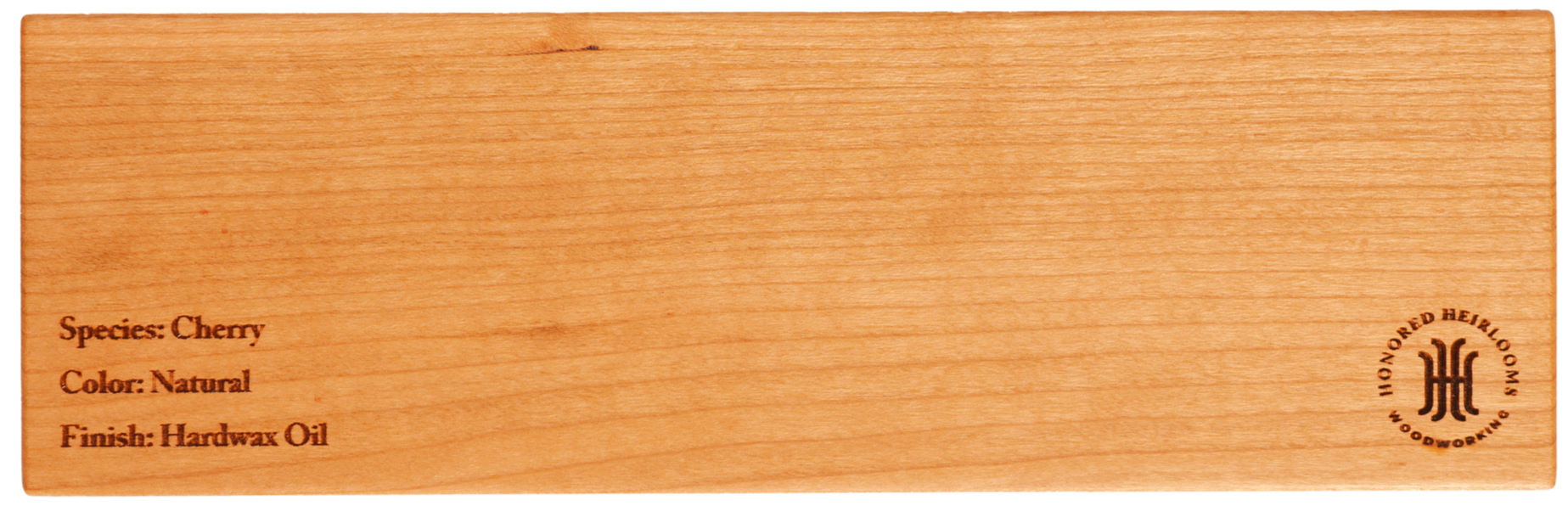
Black Cherry
Cherry is a classic American hardwood prized for its warmth and timeless character. Freshly milled cherry starts with a light, pinkish tone and gradually deepens into a rich reddish-brown as it ages, developing a beautiful patina over time. Its fine, closed grain gives cherry a smooth, refined appearance that works equally well in traditional and contemporary designs. Cherry is stable, durable, and ages gracefully. Note: The aging process of cherry accelerates with UV light, so keep this in mind when staging your furniture.
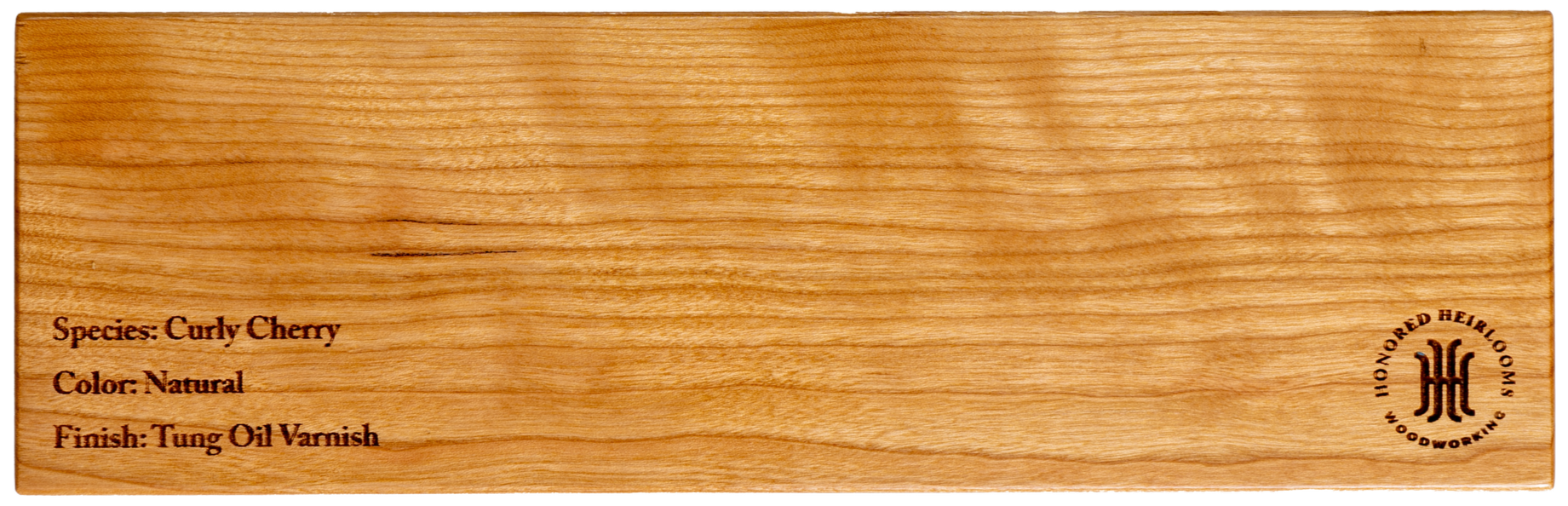
Curly Cherry
Curly cherry offers all the warmth of traditional cherry with added visual depth. Its distinctive “curl” or ripple figure shimmers as light moves across the surface, giving the wood a lively, almost three-dimensional effect. This figure is naturally occurring and highly sought after. Curly cherry is often reserved for statement pieces or accent elements where its unique character can truly shine.
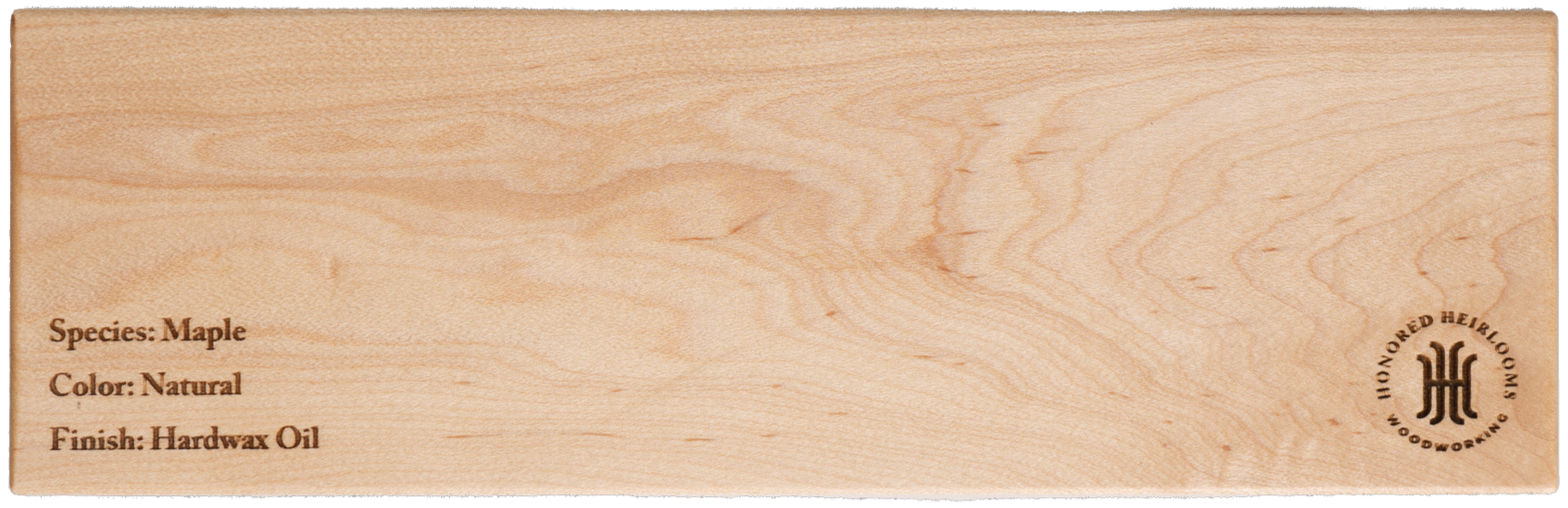
Maple
Maple is a strong, durable hardwood with a clean, light appearance. Its subtle grain and pale color make it ideal for modern, minimalist, or Scandinavian-inspired designs. Maple takes a variety of finishes well; however, staining adds more complexity. Known for its hardness and resistance to wear, maple is an excellent choice for furniture that sees daily use. Note: maple can take on an amber color and can develop a slight yellow color over time. If you do not prefer this look, ask about polyurethane finishes or special hardwax oils that maintain its natural white color.
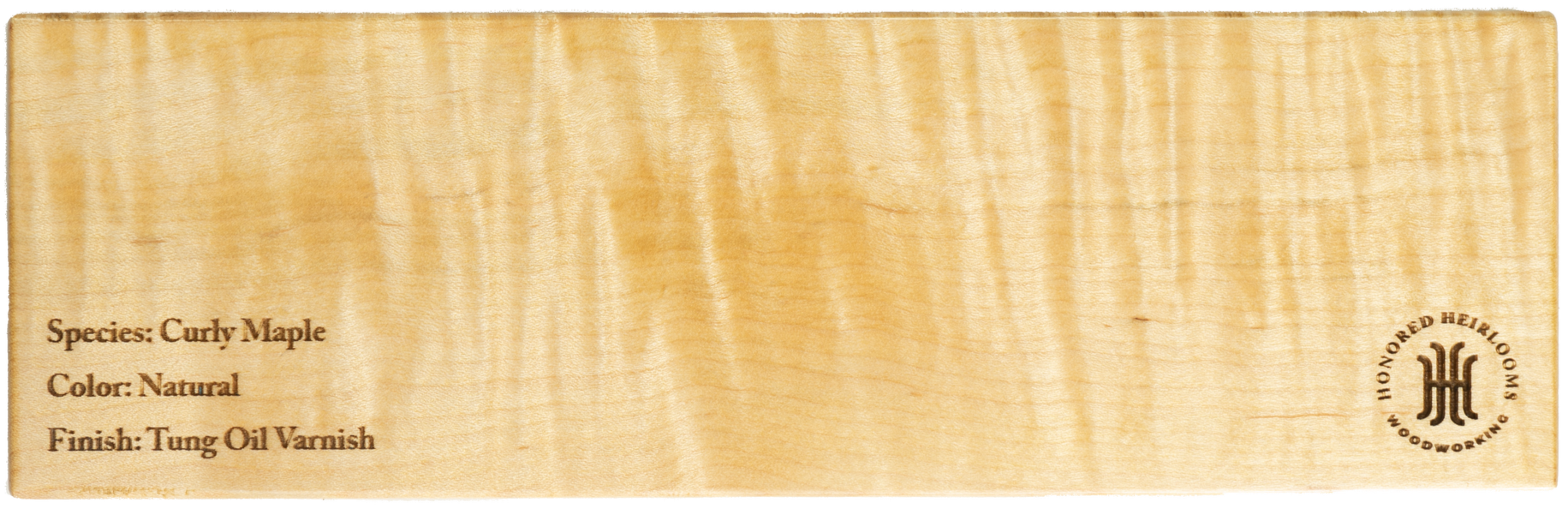
Curly Maple
Curly maple, sometimes called tiger or fiddleback maple, is prized for its dramatic figuring and luminous depth. The tight, wavy grain reflects light in striking patterns, giving finished pieces a refined, almost glowing appearance. This rare figure elevates maple from understated to extraordinary and is often used for high-end furniture, violins and guitars where visual impact and craftsmanship are paramount.
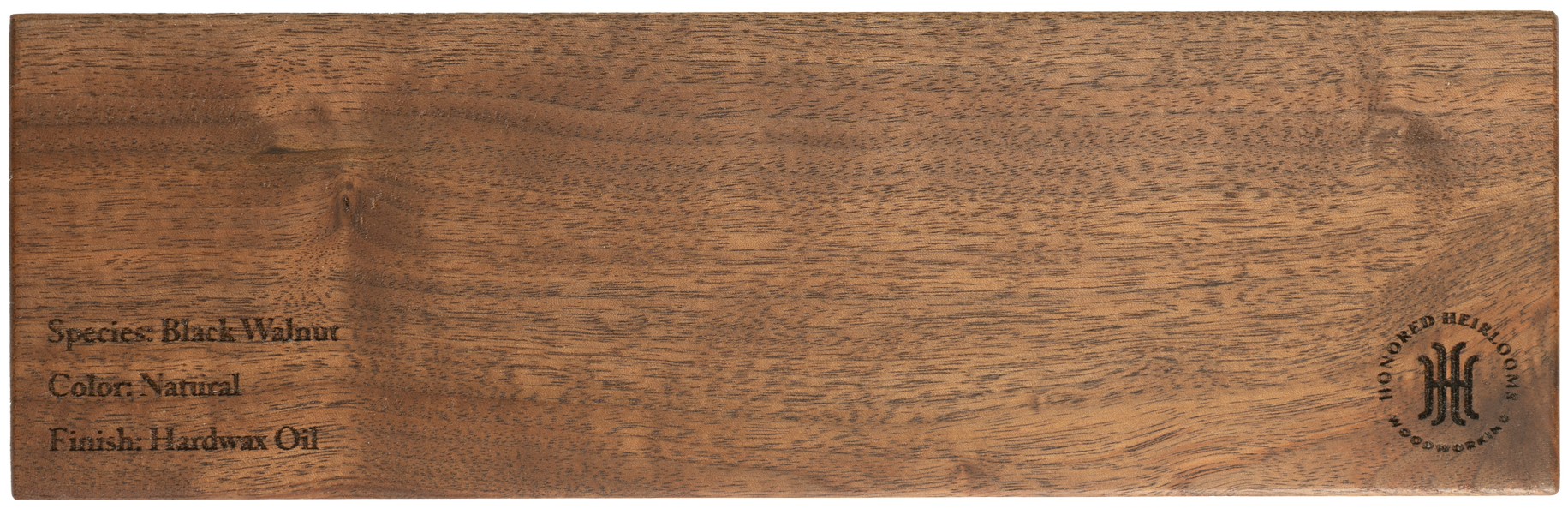
Black Walnut
Walnut is known for its rich, dark tones and bold grain patterns. Ranging from deep chocolate browns to lighter caramel hues, walnut brings warmth and sophistication to any space. It machines beautifully, allowing for crisp details and elegant curves, and it finishes exceptionally well. Walnut is a favorite for statement pieces and modern heirloom furniture where depth and contrast are desired. The color of walnut speaks for itself but can also easily be stained or toned to give a richer, darker color, or mahogany look.
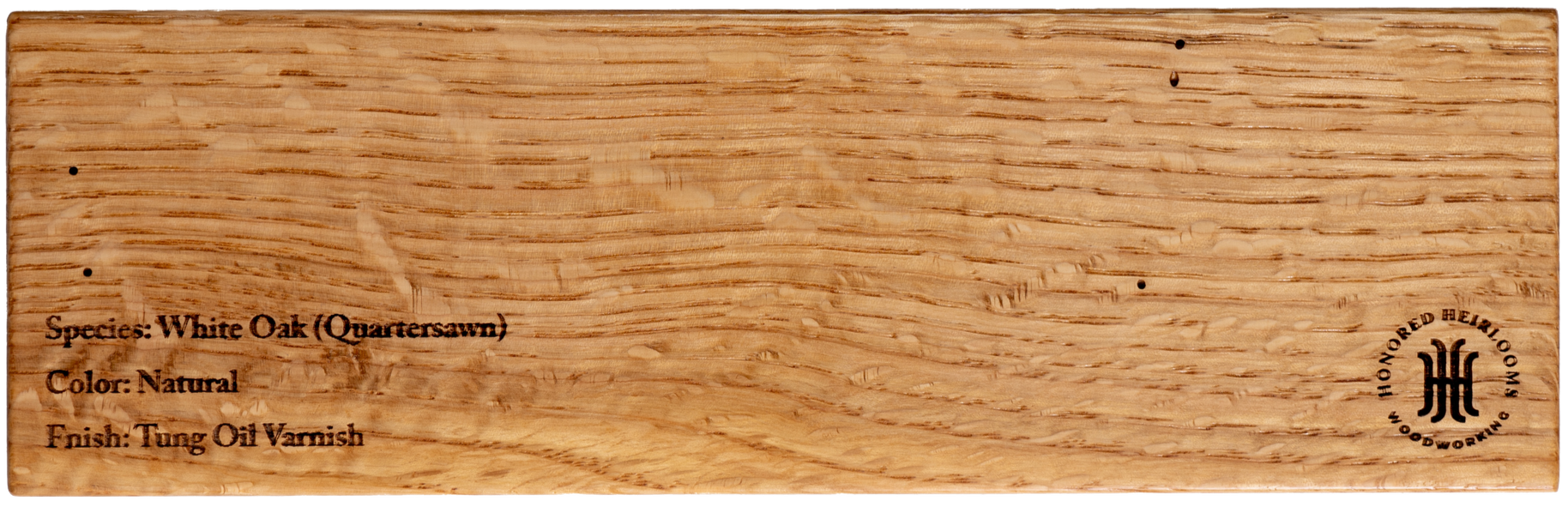
Quartersawn White Oak
Quartersawn white oak is cut to reveal striking ray fleck patterns called medullary rays that run perpendicular to the grain. This cut enhances the wood’s stability and resistance to seasonal movement, making it ideal for large or long-lasting furniture pieces. Historically associated with Arts & Crafts and Mission-style furniture, quartersawn white oak offers both visual character and exceptional durability. Most notably, white oak is high in tannins which gives the wood unique properties that are prized in whiskey and wine making. Those same tannins can be used to fume the oak, giving it a rich dark chocolate appearance. If you are looking for a true, traditional color, ask us about ammonia fuming.
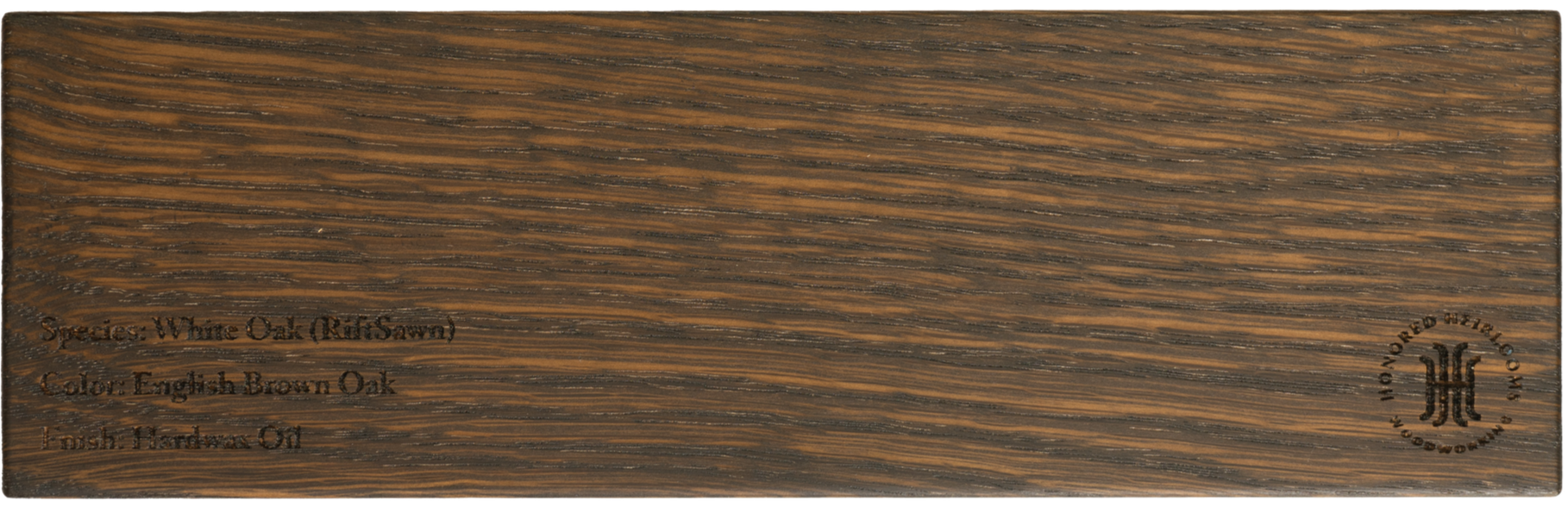
Rift Sawn White Oak
Shown here in English Brown stain, rift sawn white oak is valued for its clean, straight grain and refined appearance. Cut at a precise angle, it minimizes ray fleck while maximizing uniformity, resulting in a calm, linear look. Rift sawn white oak is highly stable and ideal for contemporary architectural designs where consistency and precision matter. It pairs beautifully with modern interiors while still offering the strength and longevity white oak is known for. Most notably, white oak is high in tannins which gives the wood unique properties that are prized in whiskey and wine making. Those same tannins can be used to fume the oak, giving it a rich dark chocolate appearance. If you are looking for a true, traditional color, ask us about ammonia fuming.
Finish and Color Options
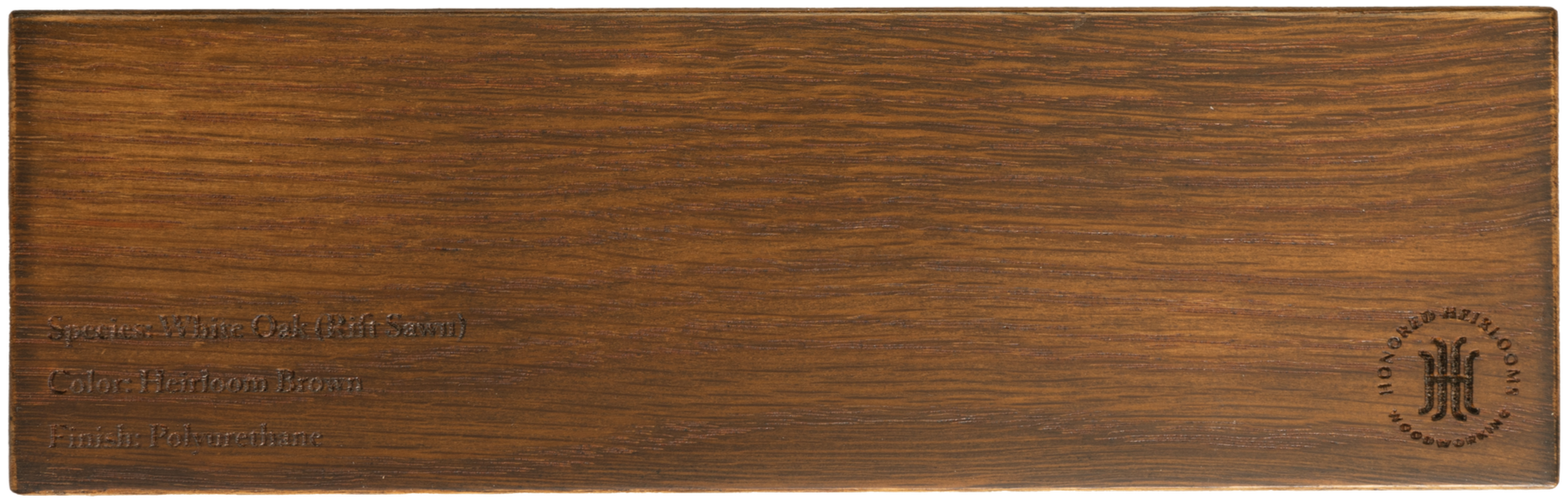
Species: White Oak Color: Heirloom Brown Finish: Polyurethane
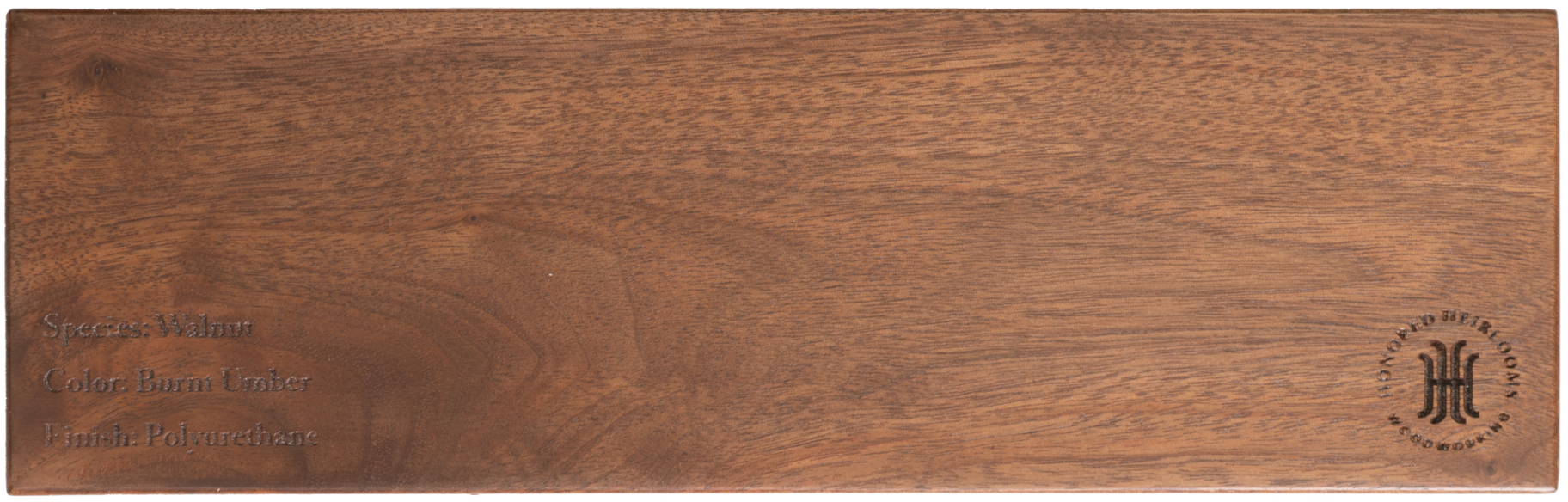
Species: Walnut Color: Burnt Umber Finish: Polyurethane
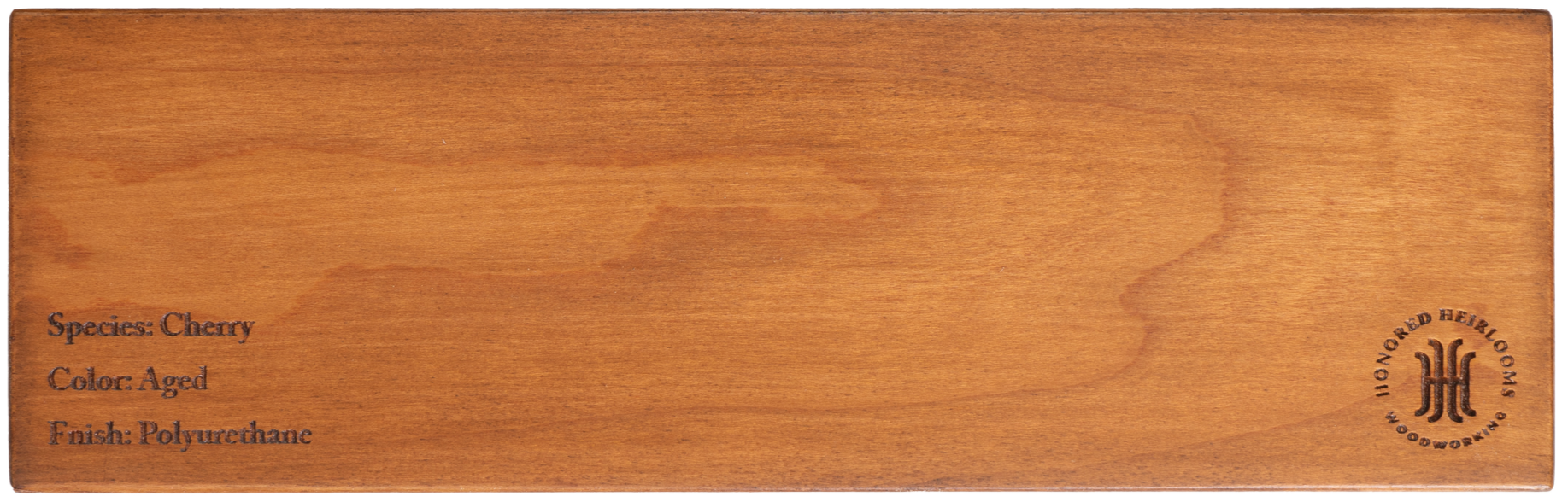
Species: Cherry Color: Aged Finish: Polyurethane
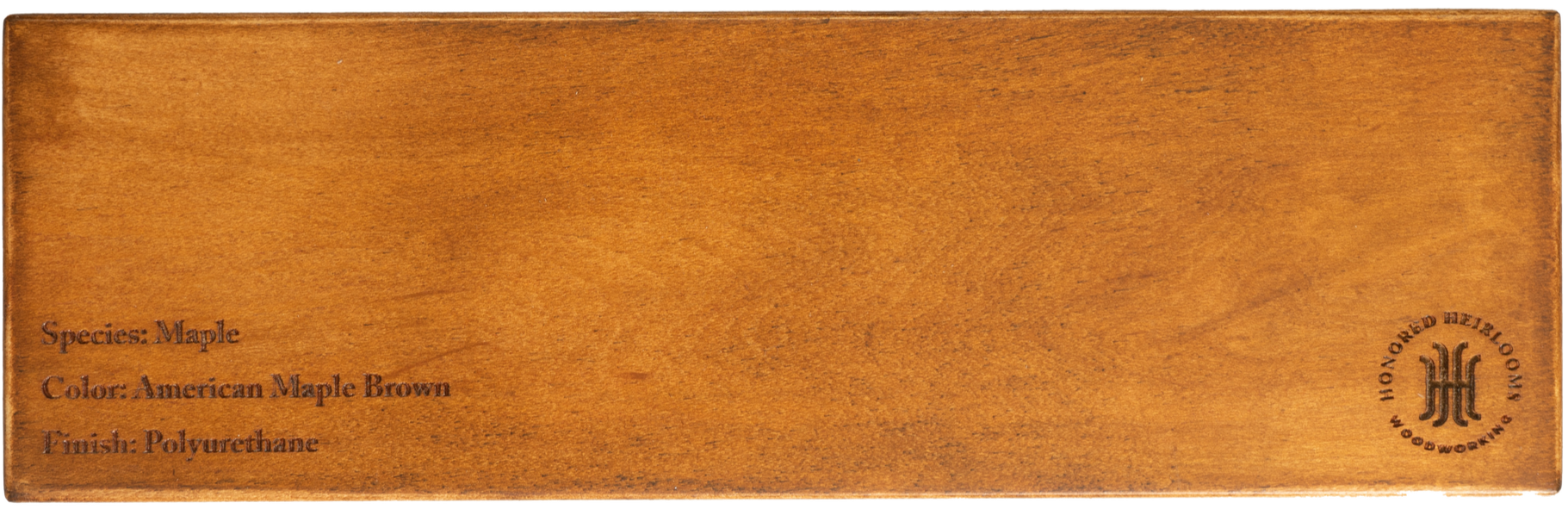
Species: Maple Color: American Maple Brown Finish: Polyurethane
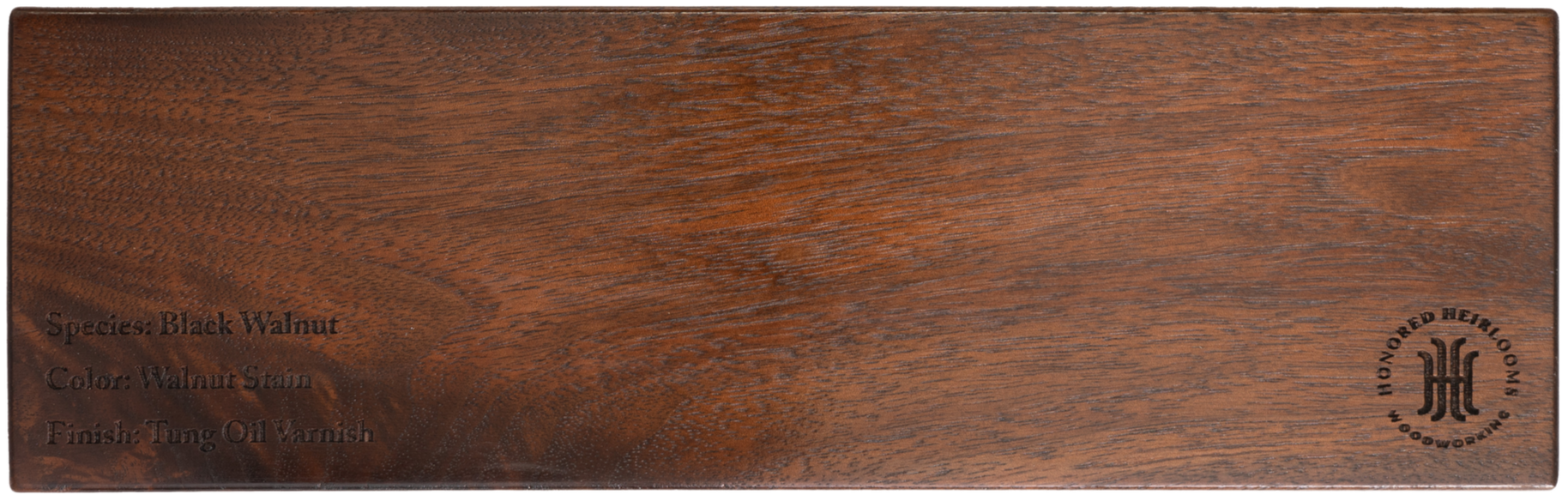
Species: Walnut Color: Walnut Stain Finish: Tung Oil Varnish
Hard Wax Oil
Hard wax oil is a natural, penetrating finish that enhances the wood’s grain while preserving a warm, low-sheen. It soaks into the fibers of the wood rather than sitting on the surface, creating a durable yet breathable finish that maintains the look and feel of natural wood. Made from natural and low VOC ingredients, hard wax oils offer a non-toxic finish that is durable and repairable.
Tung Oil Varnish
Tung oil varnish blends natural tung oil with resins to create a finish that penetrates deeply while also building a protective surface film. The result is a rich, classic appearance that brings out depth and color in the wood while offering strong resistance to water and everyday wear.
This finish is well-known for its performance on tabletops and other high-use surfaces. It develops a slightly richer, more traditional look over time and can be refreshed as needed, making it a long-lasting option for furniture that sees regular use.
Polyurethane
Polyurethane is a modern, high-performance topcoat designed for maximum durability and protection. It forms a tough, clear surface film that resists water, stains, abrasion, and household chemicals better than most other finishes.
This water-based polyurethane is low-VOC and non-yellowing, making it ideal when a clean, contemporary look is desired. It requires very little maintenance and is an excellent choice for clients who prioritize durability and ease of care above all else.